How Does Instagram Work in 2026? The Complete Beginner Guide
How Instagram's algorithm, Feed, Reels, Explore, Stories, and business model actually work in 2026, explained in plain English.
Short answer
Instagram is a free photo and video app owned by Meta that makes money from ads and in-app shopping. It ranks content separately for Feed, Reels, Stories, and Explore using signals like watch time, shares, likes, and saves, and it recommends content differently depending on whether you have a personal, creator, or business account.
Key takeaways
- Instagram runs several different ranking systems, not one algorithm — Feed, Reels, Stories, and Explore each weigh signals like watch time, sends, likes, comments, and saves differently.
- Meta's own data shows shares and watch time now carry more weight than raw likes, which is why short, rewatchable Reels tend to spread faster than static photos.
- The app is free because Instagram is an advertising business — Meta sells targeted ad placements across Feed, Stories, Reels, and Explore, plus takes a cut of in-app Shopping and Subscriptions.
- Personal, Creator, and Business accounts see the same core algorithm, but Creator and Business accounts unlock analytics, promotions, and shopping tools that personal accounts do not.
- Explore uses a three-stage AI pipeline — retrieval, early-stage ranking, and late-stage ranking — that narrows roughly 1,500 candidate posts down to the grid you actually see.
- Content discovery is mostly about matching your past behavior to similar content from accounts you don't yet follow, not about follower count alone.
What is Instagram, exactly?
Instagram is a free, ad-supported photo and video app owned by Meta, the same company behind Facebook and WhatsApp. At its core it's a content-distribution system: you post photos, Reels, or Stories, and Instagram's ranking systems decide who sees them and in what order. Understanding does Meta own Instagram matters because Meta's ad business, not subscriptions, funds the entire platform.
The app has grown well beyond photo-sharing since it launched — it now bundles messaging, short-form video, live streaming, and shopping into one feed-based experience, part of why the interface can feel crowded for new users.
How is the app organized?
Instagram is built around six main surfaces, and each behaves like its own mini-app with its own ranking rules.
| Surface | What it shows | Primary ranking signal |
|---|---|---|
| Feed | Posts and Reels from accounts you follow, plus recommendations | Likes, comments, saves, and shares relative to reach |
| Stories | 24-hour photos/videos from people you follow | Recency and how often you interact with that person |
| Reels | Short vertical video from anyone, including non-follows | Watch time and sends (shares to DMs) |
| Explore | A discovery grid of content from accounts you don't follow | Predicted likelihood of likes and saves |
| DMs | Private and group messaging, including Notes | Not algorithmically ranked — chronological |
| Live | Real-time video broadcasts | Notifications to close followers, then discovery |
Each surface pulls from the same content pool but re-ranks it for a different goal: Feed optimizes for relationships you already have, Explore optimizes for discovering new accounts, and Reels optimizes for pure watch time.
How does the Instagram algorithm actually rank content?
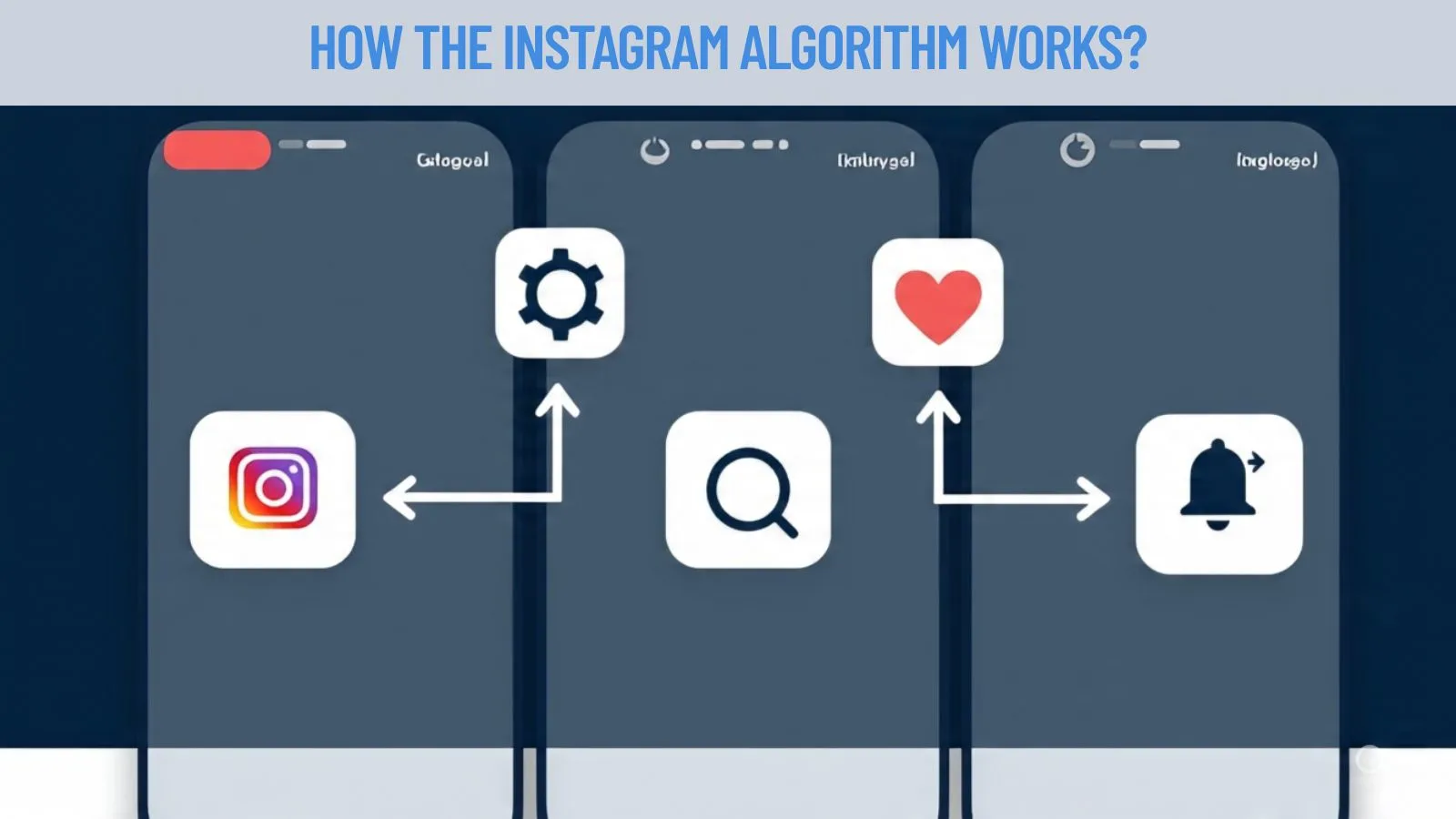
There is no single "Instagram algorithm" — Meta describes separate ranking models for Feed, Stories, Reels, and Explore. Instagram head Adam Mosseri has confirmed that watch time, sends per reach (DM shares), and likes per reach are the three heaviest signals across surfaces in 2025 and into 2026.
For Feed, ranking factors include your activity history (what you've liked, commented on, and saved before), how quickly a post is gaining engagement, and your relationship with the poster. Reels ranking leans harder on completion rate and rewatches, which is why short, tightly edited clips tend to outperform longer ones even though Reels can now run up to three minutes. If your reach has dropped, how to reset the Instagram algorithm can help clear stale signals, and a deeper breakdown lives in how the Instagram algorithm works in 2026.
How does the Explore page decide what to show me?
Explore runs on a three-stage AI pipeline that Meta has documented publicly: retrieval, early-stage ranking, and late-stage ranking. In retrieval, the system pulls up to roughly 1,500 candidate posts from two sources — accounts similar to ones you've engaged with, and media similar to media you've engaged with. Early-stage ranking uses a neural network to narrow that pool to about 100 posts, and late-stage ranking applies a multi-task model that predicts how likely you are to like, save, or comment on each one before building the final grid.
You can influence this directly. Tapping "Not Interested" on a post trains the model to filter out similar content going forward, one of the few direct levers users have over Explore's behavior.
How does content discovery work for brand-new accounts?
Discovery is less about follower count and more about how well content matches what specific viewers already engage with. A brand-new account with zero followers can still land on Explore or in Reels recommendations if its content resembles something a viewer already likes and saves. This is why do hashtags still work on Instagram in 2026 comes up so often — hashtags now function as a minor topic signal rather than a discovery engine, and posting consistency, watch time, and shares matter far more.
Timing still helps at the margins: publishing when your audience is active gives a post a stronger early engagement window, which is why checking the best time to post on Instagram is still worth doing. One distribution rule worth knowing: accounts that repost heavily (10 or more reposts within a 30-day window, per Meta's guidance) can be excluded from Explore and non-follower Reels recommendations entirely.
How does Instagram make money?
Instagram doesn't charge users to sign up or post. Meta's revenue comes almost entirely from advertising — brands bid on ad placements inside Feed, Stories, Reels, and Explore, targeted using your activity data and interests. Instagram also takes a share of in-app Shopping transactions through Business accounts, plus optional paid tools like Subscriptions and Live Badges that let fans pay creators directly. If you're building an audience with revenue in mind, how to make money on Instagram in 2026 covers realistic paths, and how to advertise on Instagram explains the business side of that ad system.
What's the difference between personal, creator, and business accounts?
All three account types see the same core ranking algorithm — Meta says there's no inherent reach advantage for professional accounts. The difference is in the tools available:
- Personal accounts suit casual sharing with friends and family; they don't get analytics or bio link buttons.
- Creator accounts add Instagram Insights, the Creator Marketplace, Subscriptions, and full trending-audio access for Reels.
- Business accounts add Instagram Shopping, contact/booking buttons, and a physical address field, but are restricted to commercially licensed audio rather than trending songs.
Switching between account types is free and takes under a minute, and you keep your followers, posts, and history either way — useful to know if you're weighing whether how to use Instagram for business fits better than a creator setup.
How do Stories, Reels, and Live fit into the ranking system?
Stories are the one major surface that isn't heavily algorithm-ranked — they appear roughly in order of who you interact with most, and disappear after 24 hours unless saved to Highlights. Reels compete in a much bigger pool because they're shown to both followers and non-followers, which is why a single Reel can outperform an account's entire follower count in views. Live video gets an initial push as a notification to close followers, then surfaces to others through normal discovery once it's running — see how to go live on Instagram for setup steps and eligibility requirements.
Frequently asked questions
No. Instagram runs separate ranking models for Feed, Stories, Reels, and Explore, and each one weighs signals like watch time, shares, and relationship history differently depending on the surface.
Sources
Keep reading
More guides to grow your account.